

Note: This was originally published in The Dispatch as a part of the “Where I’m From” series.
There was a time when Louisiana was considered part of “The Wild West.”
Men came here from the colony states looking for frontier opportunity, which really meant steep upsides for the price of mortal risk. These were not your reliable family men; they were the West-bound opportunists and snake oil salesmen. It’s the trope of characters like Daniel Plainview from There Will Be Blood and the land-stealing villains from Chinatown. It’s the sometimes ignored shadow aspect of the loner cowboy hero, revealed by simply wondering what exactly it is John Wayne was always running from.
In the early 1800s, a man like that named John Horton came to Louisiana with his business partner looking to strike big. My parish (Louisiana’s version of counties) at the time was short and wide: Feliciana. It had recently been sold to the U.S. by the Spanish. The courthouse was established in the town of St. Francisville, which bordered the Mississippi River and the westernmost edge of the ruler-thin parish. If you happened to live somewhere on the east side and you had legal business to tend to, you would have to spend a fortnight trekking through the un-European forest swamps, over endless rolling hills, each decrementing in a creek full of soggy quicksand liable to swallow up your horse and leave you to go the rest of the way on foot without your supplies.
These were the circumstances observed by John Horton, who quickly made connections with all the local power brokers. He soon gleaned information that motivated him to leave his family in the colony states: The power brokers planned to erect a new town in the geographic center of Feliciana and re-locate the courthouse there. And Horton wanted in.
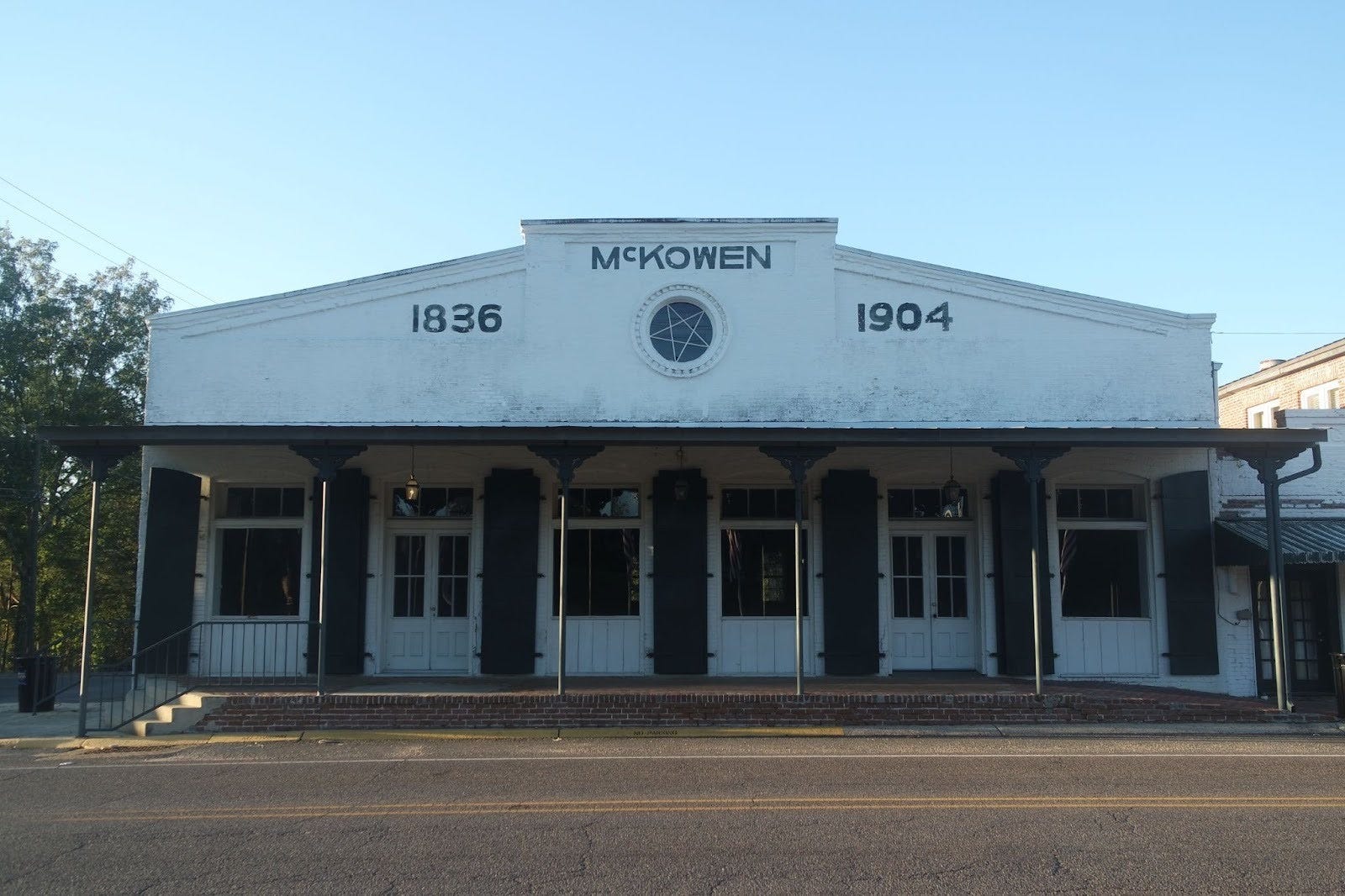
So, Horton acquired the assessor’s map and measured out the exact center of the parish, which happened to be on the bluffs of the largest creek, later known as Thompson Creek. He contacted the owners of the then-wilderness and struck a mighty bargain to buy huge swaths of their land. Sure enough, a town was founded there. He sold parts of it to the state for a steep markup and kept other portions to see what further opportunities would shake out. Already, he was rich.
Many friends of Horton who later settled in his town had fought the British with him in the Battle of New Orleans. They named their new town after their tough old general, Andrew Jackson, who was the sort of guy who would let someone shoot him first in a duel, withstand a bullet to the chest, and then still kill the other guy. The people in the new Jackson were not looking to establish churches and start families. They had come here looking for an opportunity. They had survived the war and were told they could hit it big. But as second-comers, they mostly had to settle for poker and hookers.
The wrong sort of businesses opened all over town: pool halls, gambling dens, bars. The Jacksonites were so rowdy and violent that people hated coming to our courthouse even more than they hated the trek to St. Francisville. So, the politicians hatched a new idea. They split Feliciana right down the middle into East and West. Again, St. Francisville would be the courthouse for the western side. The more central and wholesome town of Clinton would be the new courthouse on the eastern side. Jackson was left out in the middle. Horton was ruined. He sued the judge for $50,000 (almost two million dollars today) but lost. He died poor and far away from his family.
On Main Street in Jackson, the largest live oak by far has a plaque out front: John Horton, founder of Jackson. He is still the guiding spirit of my little town, whether the locals know that or not. It plays out over and over through our strange history: A great Southern college was started here, but was moved across the state after too much political chicanery; the South’s largest and most beautiful asylum campus was placed here, but was later defunded by corrupt and short-sighted Louisiana politicians and partly abandoned; films like a Twilight sequel were shot here, but the people who ran the local studio had such a bad reputation that they eventually ran the Hollywood producers out. Our opportunism has created unlikely windfalls, and that same unrestrained opportunism has overplayed its hand.
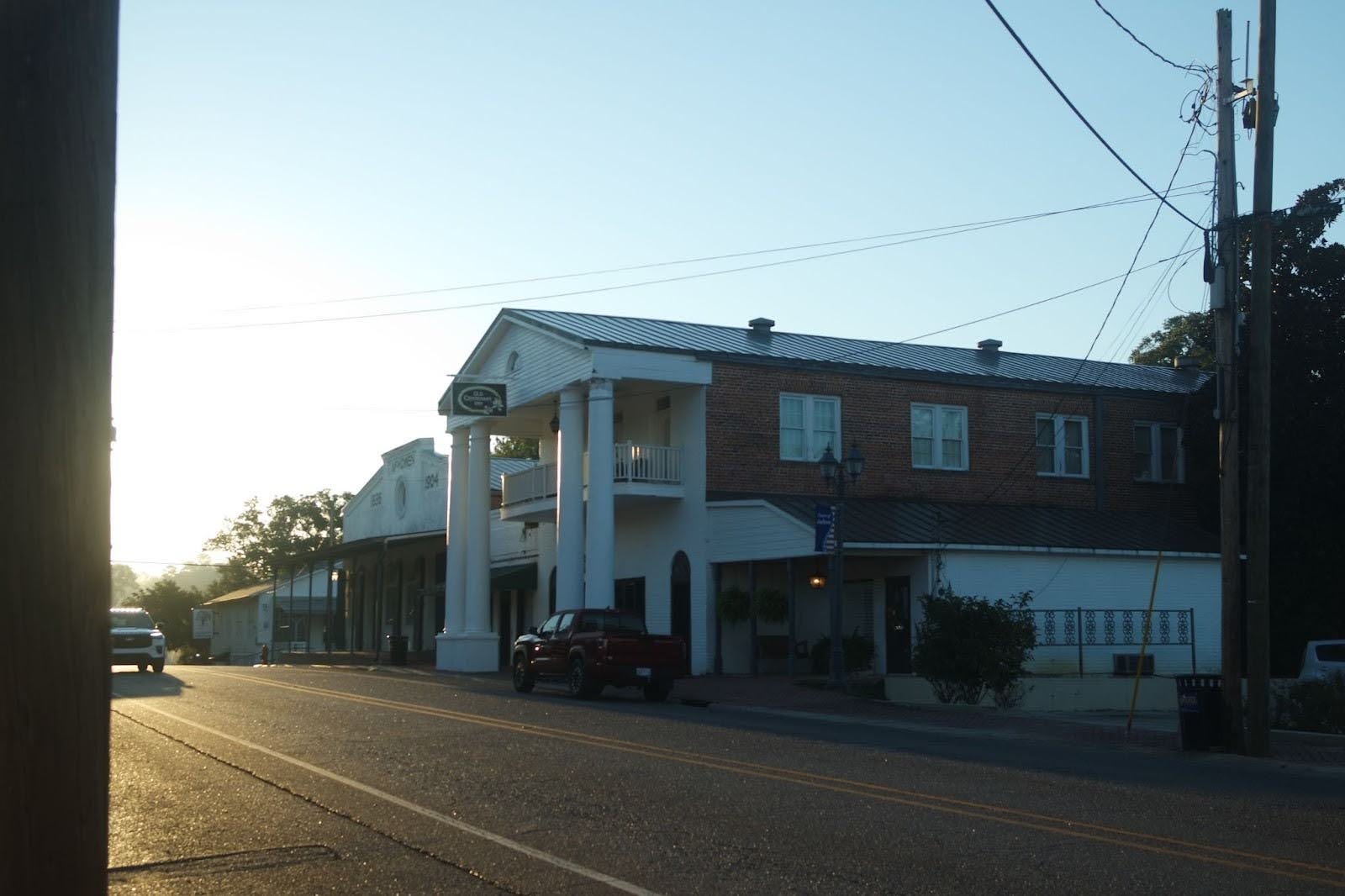
If this were an appeal for Jackson tourism, so far I’d be doing a terrible job. The more subtle sale I want to make here is to show Jackson is not some aberration to avoid, but as an unusually pure and honest distillation of the American spirit and therefore a place to rebuild our most complete redemption. We are all John Horton, looking to hit it big. Here we have the opportunity to go home and fix his mistake.
Growing up in Jackson, my dad (himself an entrepreneur) said that he was always running West, apparently dreaming of some frontier before I knew or cared about anyone named Horton. I did end up in California, living on Sunset and chasing the shadows of the last hyper-frontiers in Silicon Valley. I was willing to endure risk for a possibly uneven upside. That’s where I met my wife. But was I willing to see how that pattern typically shakes out in the end? Maybe I’m still becoming willing.
Not to get too mystical, but I had a dream that I should move back to Jackson, and my wife and I eventually did. I don’t know how to explain it, but other people seem to have had the same intuition throughout the years: They keep coming here and spending millions to fix up the historic homes, theaters, and the college. Their style is neoclassical, so the richest benefactor here tried to coin the town “The Athens of the South.” That hasn’t caught on yet, and so much of the beauty here is still unnaturally cheap and in need of new families and stewards.
The ghost of John Horton still haunts this place; he has unfinished business, it seems, and I’m drawn to finishing it. I think that means I have to stop running West and stick some roots in the ground where Horton tried to put a straw. I don’t know the first thing about reviving a small town, but I just have a feeling I’m supposed to live here, raise kids, and not try to get mine and go.
For the first time, it feels like there is a new type of American frontier in going back east and reclaiming the middle.
Our country is growing up.
Loved your last sentence
You have a great sense for the importance if your town’s history.