

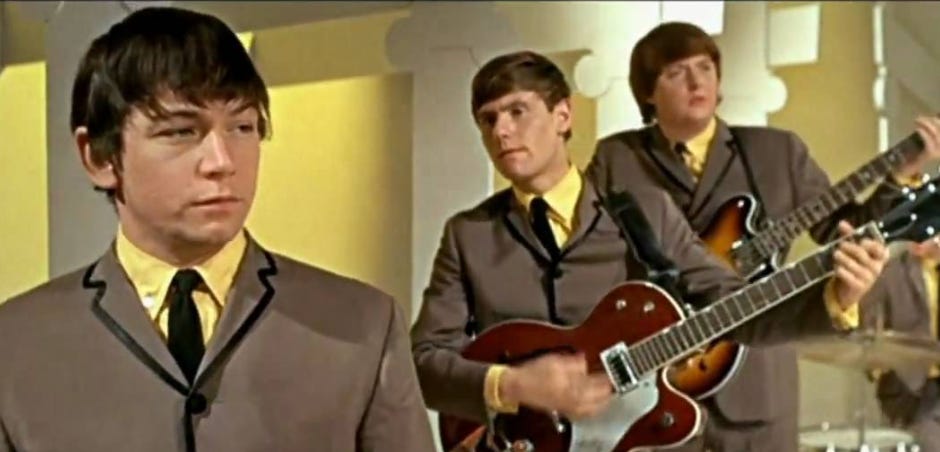
An edited version of this piece was originally published in Country Roads magazine, which is rural South Louisiana and the Mississippi Delta’s fantastically unlikely cultural publication. Check out the rest of last month’s music issue here.
Thanks for reading,
JTF
When I lived in California and I told people I grew up in Louisiana, most of the time they would say, “Oh, like New Orleans!” and then tell me they would love to visit one day.
I smile and nod, happy we have a touchstone, but think, no, not like New Orleans, actually. Los Angeles feels closer to New Orleans than where I grew up. But that would start a conversation that ended with glassy eyes, so I go ahead and let them think I’m a NOLA boy.
When I was growing up, though, New Orleans didn’t feel like it was down the road. It felt like the end of the road; about as far away as you could get. It was both the center of the world, being the biggest city in my state, and also the very edge: a liminal zone full of voodoo dream totems and pushy mediums in layers of purple linen. You went there to get drunker than your parents ever need to know about or hear a fortune about a future wife who lives across a body of water with two sons from a previous marriage.
That slightly hokey and wispy spookiness of the Crescent City solidified into downright dread the day I heard that my brother died in a house in New Orleans. He was working as a line cook someplace and trying to recover from his heroin addiction. So, naturally, the radio hit “House of the Rising Sun,” which is set in a sort of mythical New Orleans, began to stick out of the background chatter of chain restaurants. I am the young brother that the singer warns to not “do what I have done.”
I always assumed The Animals (the version you probably know) wrote the song. But, no. Bob Dylan? No. Woody Guthrie? No. How about Lead Belly, plucked out of Louisiana’s Angola prison by a record exec? Still, no.
Who wrote The Rising Sun?
I can tell you the short answer is nobody knows. The more entertaining answer, and probably also a true one, is that nobody wrote it. It emerged like a singing ghost from the hills, through the thousands of mouths of Southern and Appalachian folk singers, long before we had radio, recording machines, or even trains started striping the woods.
My first job out of college was a traveling salesman, selling software to hospitals all across the country, mostly in the South and Northeast. I went to Kentucky, Arkansas, and Tennessee, and even so far north as Illinois. Being from a small Southern town, I was surprised to find that the “South” wasn’t just the place below the Mason-Dixon line. You just had to drive about 45 minutes from any major city, and suddenly people were huntin’ and talkin’ with a drawl.
I drove to many places like these, sometimes with “House of the Rising Sun” playing (I especially liked the Alt-J version at the time), thinking about what this country was like before Walmart and a McDonalds lined every interstate. Because of that universal backlit plastic signage, we can be fooled to think we all live the same sort of lives. But if you do ever drive a little further, which I sometimes did to find a certain rural hospital, a whole different universe opens up. An older one, and one that is probably fading from memory. You can still hear it, if you have the ear for it, through the haunted chords of that song, it’s first singers’ voices still echoing above the burning pines, the heat beneath its wings.
The song probably first started appearing in the late 1800s. The carpet baggers began reconstructing mostly around major Southern cities, so strictly Southern sensibilities tended to survive in small and remote towns in the hills and mountains (hence “hillbilly”). Some of those hillbillies had up to 500 folk songs in their head. This period from about 1865 until the start of the modern era in the 1930s is a period unlike almost any other: the seeds of the American music that the entire world still loves today, practically all of them planted then and there.
It was just before the recording machine and therefore mass media, but just a few years after trains started to connect all those little remote towns to the wider world. It was a liminal time in history, like when you first wake up: conscious enough to know you’re dreaming but asleep enough to dream.
It was the era of the “ramblers.” The sort of men who tended to cut town for various reasons (usually bad) and go on to the next one to try their luck and maybe to share a few songs. They were liable to tempt your kids to run off to the city for “opportunity,” but for drugs, gambling, and prostitution just as likely. Put a few ramblers and rounders together, you had what was called a “Medicine Show.” They would travel from small town to small town, playing music and then selling snake oil and cure-alls, made by “doctors” with names like Doc Hudson, who were also probably sleight-of-handers and banjo players. You may hear Doc’s haunting song, half-remember it, and then never see him again. You make the tune your own, changing the lyrics and melodies slightly to better sing it to your cousins on the porch. Through time and generations, only the most deeply resonant melodies and images remain, spread orally via train hopping hobos.
A distillation process took place through people memorizing the songs that were, well, memorable. But maybe more importantly, by forgetting what is forgettable, music is paired down to its most truly archetypal shapes in a way that just isn’t possible before frontier America or after mass media.
A new world was just waking up; an exciting world of technology and music and city living and its vices. All you have to do is just follow any waterway, from any old mountain or hill town, to its very end. They all eventually lead to New Orleans, where you could record an old family tune that might make you famous.
By the turn of the 20th century (around the time my house was built) if you asked just about anyone across small Southern towns if they knew “House of the Rising Sun,” they would probably say yes or at least point you to someone who did. If you then asked how they learned it, they will tell you a grandparent taught it to them or they don’t remember. It was already there, it seems, like old growth, warning about some permanent fault in our souls.
Near the end, depending on the version, the singer says they “have one foot on the train, one foot on the platform.” There is a moment of hesitation, a possible choice. They do choose to go back, saying, “My race is nearly run.” They, like my brother, will die under the rising sun.
Whatever poor wandering spirit that gave rise to that song wants you to know, for only a passing flicker near the end: you can step off the train.
Great post. Had never cottoned to that symbolism, that New Orleans is where virtually every waterway in middle America ends up, right before they join the infinite ocean, the end of the line for everyone that gives up. You have to wonder if NO occupied a subliminal dark place in midwestern and midsouthern psyches. You could get sold downriver. Or you could just drift there.
The genius.
Thanks for this, James!
I also feel compelled to note that in the version Woody Guthrie recorded, and in the first known recording made of this song (folklorist Alan Lomax recording Kentuckian Georgia Turner), the speaker is a woman, and it’s implied she’s a prostitute/has been trafficked. See more here:
https://www.americanbluesscene.com/2011/11/a-brief-history-of-house-of-the-rising-sun/