

What I always most look forward to about air travel are the seemingly mystical experiences I have in those liminal spaces.
Like a mother after childbirth, I always seem to forget that the first few hours are torture. I miss my routine, my ability to soothe every moment of boredom, and not be hemmed in on both sides by chubby elbows. At some moment, a few hours in, I break through to some extra place. There’s a new thrill of rootlessness. A spiritual severing, like I’m balled up in a womb 30,000 feet up, alone and clearheaded. I’ll have some podcast going or some book on my Kindle when the ideas start coming to me in rapid fire. I can almost not keep up with them in my Notes app. It’s not the time for truly finishing these ideas, of course, but just to leave breadcrumbs for my future hard-working self.
Presently, I am my future hard-working self. Most of those breadcrumbs are now inscrutable. My insights didn’t survive the landing. I just got back from a trip to Los Angeles. Now I’m back in the place where I write every day. Here it occurs to me that the process of thinking all the way through an idea is something close to psychological torture. My mind would rather do just about anything else but this, which explains, I think, procrastination. As a matter of fact, it explains plagiarists, hacks, and slop pushers too.
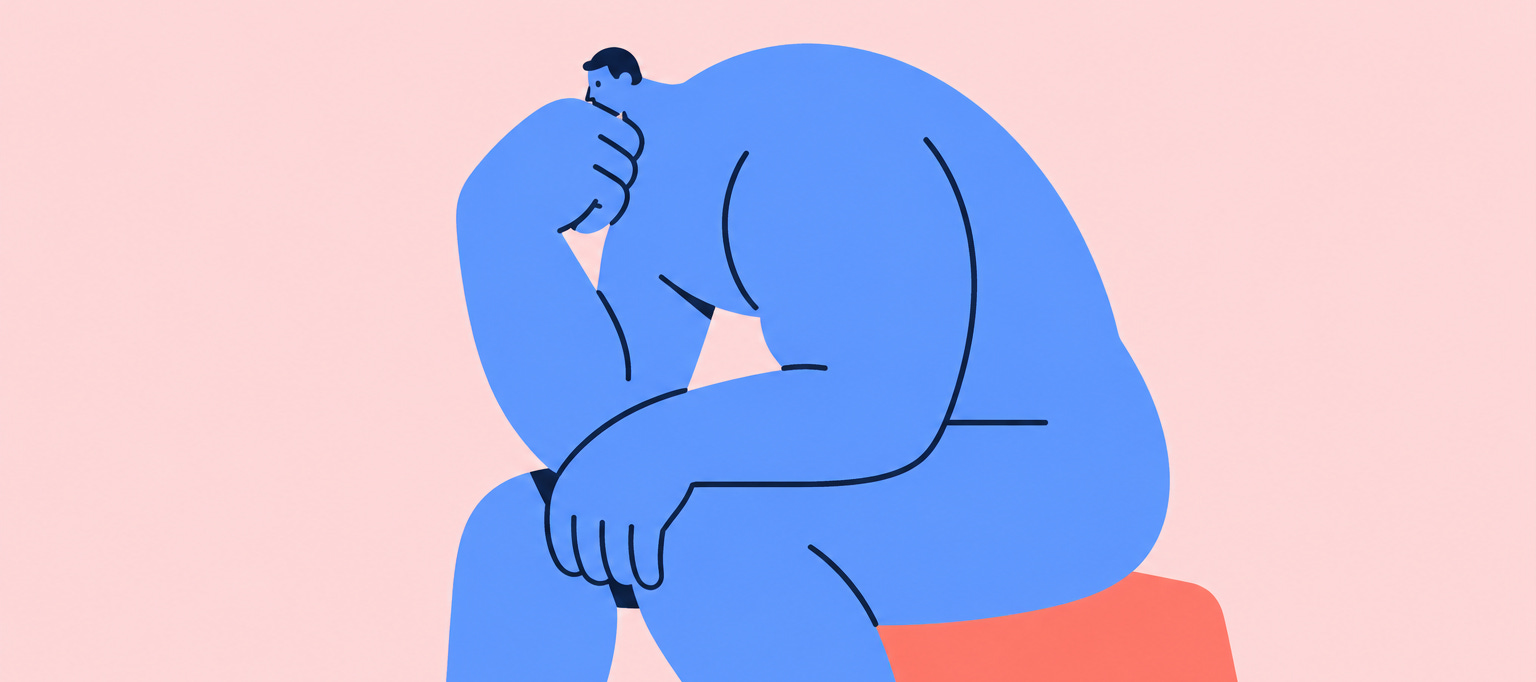
Sitting down to really think through an idea, to let the imagination expand out of the margins of the well-understood, edging into the dark half-freaky hybrid places of the once-dreamt-of and the fearfully intuitive, hurts. More than getting beyond the hurt, to write and to sort through new ideas, most of them stillborn, you have to sit balanced in this twilight band for a very long time, examining the creatures therein, one by one. Some of the beasts are too ordinary: been there, done that. Some of them are too freaky, nonsense, chimeras of unrealistic anatomies. Some of them will threaten your sanity. Occasionally, in this place, you’ll find the shining twelve-point stag across a glen. If you’re careful and quiet, you can follow and see where it leads you.
I used to doubt the existence of, or the importance of spending time in, this place. The Romantics wrote about it, "…capable of being in uncertainties, Mysteries, doubts, without any irritable reaching after fact and reason." Sometimes they elevate my heart enough to make me believe it for a moment.
Recently, however, I have become absolutely convinced that this is the only way to create anything worthwhile. That conviction came from an unexpected development (AI). Like most beginner writers (and don’t punish my candor), I, while finding my voice, was halfway convinced that you could borrow a tidbit or flash of prose here and there. No one would really notice, care, or find out. “Real originality” is probably just the unconscious fusion of various influences anyway, so what’s the big deal?
Now, if I borrow an idea to make my point or to impress, the chatbots can usually identify exactly where I got it from. At an even higher level, to the great frustration of all the slop pushers and plagiarists out there, if you use AI to fill in your insights, there are near-faultless (1 in 10,000 false positives or better) detectors that will easily identify that fact. To me, this partly reveals the shape of the ontological ground of true insights. The liminal zone leaves fingerprints in the matrix of our symbols. You can’t consume only compressed outputs without severing your fingers.
If I don’t know about a topic, read AI summaries, and then try to write about it shortly after, my own “original” writing will be flagged as AI-generated. That is, by the way, what I think is going on with people who are claiming “false positives.” True instances of that are incredibly rare. They’re most likely just consuming AI prose around the topic they’re about to write on, absorbing the way it frames, and spitting it out again with enough of the pattern intact to still be measurable. I’m finding that insight from the real liminal place always leaves its fingerprints.
For the last 100 years we’ve loved summary and compression too much. “I interviewed the world’s greatest experts, and here’s what they all have in common,” or, “I spent my life learning how to build habits, so you don’t have to,” or “36 lessons I learned in 36 years,” or something like that. The reason we’re so drawn to shrunken-head content is the same reason we’re drawn to procrastinate and plagiarize. We genuinely believe that we can get away with something. Those writers, in fact, are pseudomartyrs in the religion of the hacked self. Steal 30 years of my time in just 30 minutes, bro. So, of course, we’ve been primed to devour AI summaries, and then to be pissed off when a reconstruction of an AI summary is felt to be obvious AI prose, no matter how hard we wish it were like the people’s work we actually admire. We were given a bad promise, we took it, and now we’ve become spoiled and entitled.
But think about it: How many of these pre-slop life-hack people have written a great novel, song, screenplay, or built a beautiful house, or anything actually recognizable beyond their ability to sell shortcuts to other people? If anything at all, that is their original insight, and it’s a trick.
You can’t live on compression alone. You can't shrink your head and still have room to live in it. You have to skin your knees to learn how to ride a bike, and you have to sacrifice a part of your life to be a cyclist. Sometimes blazing insights come to you while high in the air, listening to the compressed insights on a podcast, or while reading self-help, or tinkering with AI. It's a misleading first act. The second act is dim, painful, and confusing.
So I’m back in my routine, walking in this twilight band, looking between clichés and chimeras, fighting, or even contemplating, my fear of this place. I’m fighting my mind’s desire to flee, think about something else: something known, something given. There actually is something new under the sun, and if I can find it, it will be a sort of tesseractal hunt. There are no useful compressions for this, only the thrill of relying on your instincts.
The first step to finding it is to believe that it exists. Enough, at least, to tolerate the liminal places where it would live.
Lovely piece, you managed to compress so much in not so many words
I am someone who has a very active mind and enjoys sitting with ideas, and your description of sorting out liminal monsters is one of the most relatable things I have read.