

Behind an Orthodox church in an exurb outside Cleveland, there was a conference about re-telling the cosmic epic. To a panel consisting of Jonathan Pageau, Mary Harrington, Father Josiah, and Deacon Seraphim I asked, “Why can’t we tell better stories than Hollywood yet?…”1
A smattering of reactions I can recall: Pageau briefly went into how movies are combinations of all forms of media, making them like the crack of entertainment. Mary said “I don’t know,” followed by “It’s kind of a loaded question, like ‘when did you stop beating your wife?’” and Father Josiah said, “Hollywood does not tell stories.”
Jonathan is right, but I think his assessment is incomplete. Film does uniquely combine the existing forms that already most attract us: music, images, drama, etc. – but for me that doesn’t quite capture the allure of film, which is more about the hybrid demands of the medium itself than any particular component of its output.
Movies seem to sit in the awkward middle of an axis: dissolved from below by infinite scroll and condescended to from above by book people. You can only understand why film is such a strange, hard-to-beat pinnacle if you see it along two axes instead of just one. Film, importantly, begins intensely literate. To make a great movie, you need to write a screenplay that is so great on its own terms that it motivates a literal village of people to sacrifice several years and millions of dollars to bring it into being. The first of many things remarkable about films is that you need a hyper-literate cohort of specialists and visionaries to self-consciously calculate all the mythical elements, but you can be practically illiterate to enjoy the results. Book lovers may complain, famously, that the movie was not as good as the book. That is sometimes true (but not always) from a pure literary perspective. But the movie is achieving a lot more than pure literary quality. The second miracle of film is that it simultaneously succeeds in the tribal/oral domain. It has to slip through Overton windows to enter the acceptable unconscious of the culture while also appeasing global market interests. Making a successful movie that also happens to be good literature is basically impossible. That is why we are all involuntarily awed when it happens.
I say “involuntarily” too because, even at this summit full of the most literate people around, despite some of them being anti-film, or probably more accurately, anti-Hollywood, they are still just as likely to use a Hollywood movie as a touchstone as a book. This makes perfect sense given Marshall McLuhan’s framework, borrowed by Harrington: movies allow us to participate in a global village, and that is very useful when a lot of strangers meet in Cleveland for a weekend. Books, on the other hand, feel more like gold you purloin from esoteric lands and display on a shelf. The knowledge is often deeper but harder to share.
If you or I tried to make a movie, we would put our actor on a flat background and film him saying the lines, and then be appalled by the stupid and ugly footage that has nothing to do with what the writing made us see in our mind’s eye. Most of us will never understand the millions of choices and vast cooperation of institutions of craftsmen that must go into making something tribal emerge from a literary dream. What it takes to make a shot of grain and a man’s hand suggest mortality. This is why we admire auteur writer/directors almost more than anyone, even if we can’t understand or articulate why. They can not only write world-class literature, they can serve it to you in a hypnotizing vision, filled with a million hidden intentions, perceived passively in dark theaters. We accept their work, if it’s good enough, as reality and then walk around projecting it on everything. Without knowing we know, we know the power these artists have over our very perceptions, and so we both hate them and love them more than anyone. Great film takes private literacy and transmutes it into communal gold. Walter Ong’s “secondary orality” is not necessarily an evil. When done toward a lie, it is propaganda. When done toward the good, true, and beautiful, it is the best tool we have. The New Right so far fails to capitalize here because it tends to conflate correct ontological propositions (which it often has) with these many embodied choices.
Wendell Berry was horrified to find that in the slums of South America they had little tube TVs in most shacks, all playing American TV and movies. A lot of these children would draw their TV when asked to draw their best friend. They are not fawning strictly because of multimedia stimulation; they are obsessed by the Western hyper-village transmitted through the form itself, which they would nearly as happily watch on mute through a keyhole. This is an extreme image of the medium with nothing good poured into it and why we sometimes think we need to reject it totally. Movies, but especially TV, have this re-tribalizing effect that partly undoes what widespread literacy initially did to form the West, an undoing now accelerated by the phones. Mary’s own talk set this up as essentially the origins of a post-literate society and she laments that. She also notes that before widespread literacy, people had to memorize epics and sing them over hours. I asked Harrington if she thinks being highly literate is a help or a hindrance in an increasingly post-literate world. She answered to the effect of, “I don’t know, it depends if you mind being lonely.” Big laugh.
As you might be picking up on, I’m a little perplexed by this dismissal. It was a panel, so they’re put on the spot and quips are natural. In her prepared talk (now published on Substack, which was fantastic, by the way), she makes a central claim that I agree with: we are entering a new sort of dark age. Her prescription is custodial: keep the lamps of the literate past burning like the monks did. Memorize, preserve, contemplate. She specifically makes the comparison to Noah’s Ark: it is not a universal solution and most of the world will be flooded. The problem is that the historical monasteries were never only inward, nor did they wait for formation to finish before turning outward. The copying happened in the same building as the chants. They evangelized the illiterate masses with the best of hybrid media of their day: music, liturgy, icons, architecture, stained glass, mystery plays. The other thing, I think significantly symbolic, is that the story of Noah ends with an explicit promise to never flood the world again.
We certainly seemed to speak highly of ancient illiterate societies for their oral storytelling abilities. We also seemed quite eager to bemoan the failures of the too-literate West (especially as judged here by the Orthodox East), with its lack of good mythos and its temptation to raise science to the place of religion. But then as we approach this new world and the opportunity for the highly literate few to make the best of our day’s hybrid art (which we revealingly can't stop reviewing and breaking down2), suddenly we pretend to be confused about what our aims actually are.
Despite still being able to occasionally make good things, creativity has drained away from increasingly risk-averse and sequel-happy Hollywood for decades and left a wide open opportunity for this new “myth” cohort to do some wild stuff. The fact that we have so far largely failed to capitalize on this gap, perhaps too distracted by our own sneer, is embarrassing. The mostly uncreative and also somehow anti-traditional Disney-exec types are still winning despite only pretending to be marginal, basically hating normal people, while also having almost nothing interesting to say. When the monasteries were the only place people could read, two things were much clearer than they are now: a monk’s duty was to serve illiterate masses with whatever they could most easily understand and participate in, and that not everyone needs to be a monk.
The central mistake of the majority of the ‘New Right’ — that emerging cohort of traditionalists who are much more creative than the neocons who came before them — seems to be its readiness to merely mock Hollywood films for their semi-illiterate woke propaganda. Father Josiah tapped into this sentiment with his comment “Hollywood does not tell stories.” What? He might have meant that Hollywood films sometimes invert the truth, or maybe they are not as participatory as a liturgy, which, sure. But half the speakers referenced a film in their talk to help a general audience participate in their point. One of the speakers was even ex-Hollywood. We love films. We would love it if more of them better retold the cosmic epic, but for some reason we can’t do it for ourselves yet. Gibson did it twenty years ago, once. But he funded it himself, so it didn’t happen again. Instead we feel vaguely like the “real” solution is reading more books and watching fewer movies or something. When pressed on this contradiction, we handwave that films “used to” be better, but fail to be specific about when that was and when, exactly, it all went to hell.
What the current conservative media incentive machine does, in its revealed function, is take the excesses of weird beliefs on the left and mock them to death for political or pseudo-artistic clout. That’s fine, but there’s a natural ceiling to this niche. The more effective you become, the more they are pushed toward the margin, where they function normally again, and break your business model. Artists are disproportionately marginal and weird. Most of them will fail. But a very small percentage will come up with something transcendent. What’s unique about our age is that we are so prosperous that the marginalized have started to meaningfully take the center, which is a pretty good definition of what “woke” actually is.
Media empires like the Daily Wire have emerged in reaction to this, bankrolling the New Right’s rising players to mock the work out of the center again. They rightly think that a lot of popular art has been captured by weird ideologues, but they can’t seem to do better themselves, fundamentally because they make a living mocking the very people who occasionally manage to do it. The Daily Wire tried to create a Snow White as a reaction to Disney’s “woke” Snow White, which they mocked as “Sand Beige.” Tellingly, they never released their own version. Angel Studios, for another example, can only make pretty good imitations of great films that have already been made (The Chosen is maybe an exception). Young Washington is competent as a timely counter-signal to Hollywood, but nothing about it is transcendent enough to make it a classic on its own merits. Interestingly, they have admitted to using generative AI effects to shortcut otherwise hard and expensive on-set choices.
In general, conservative incentive structures just aren’t as likely to pay for the massive risk required to produce truly good hybrid and therefore culture-defining art. Nobody is willing to invest patient capital in institutions that only mock. What’s potentially special about the New Right moment, in many ways a mirror of the woke phenomenon, is that there is a minority of genuinely high-openness and creative traditionalists now in the mix. A huge portion of the population would pay for what they want to make. Many of them were at this conference and even approached me to talk about their creative projects after I asked my question, also feeling unsatisfied by the answers. Jeremy Boreing was one hopeful creative voice in the reactionary system. However, he “stepped down” around the time his creative project “Bent Key” financially failed. It worked against the Daily Wire’s own woke-mocking incentives. They have made a few financially successful movies, yes, but notice they are all long-form mockery of the left.
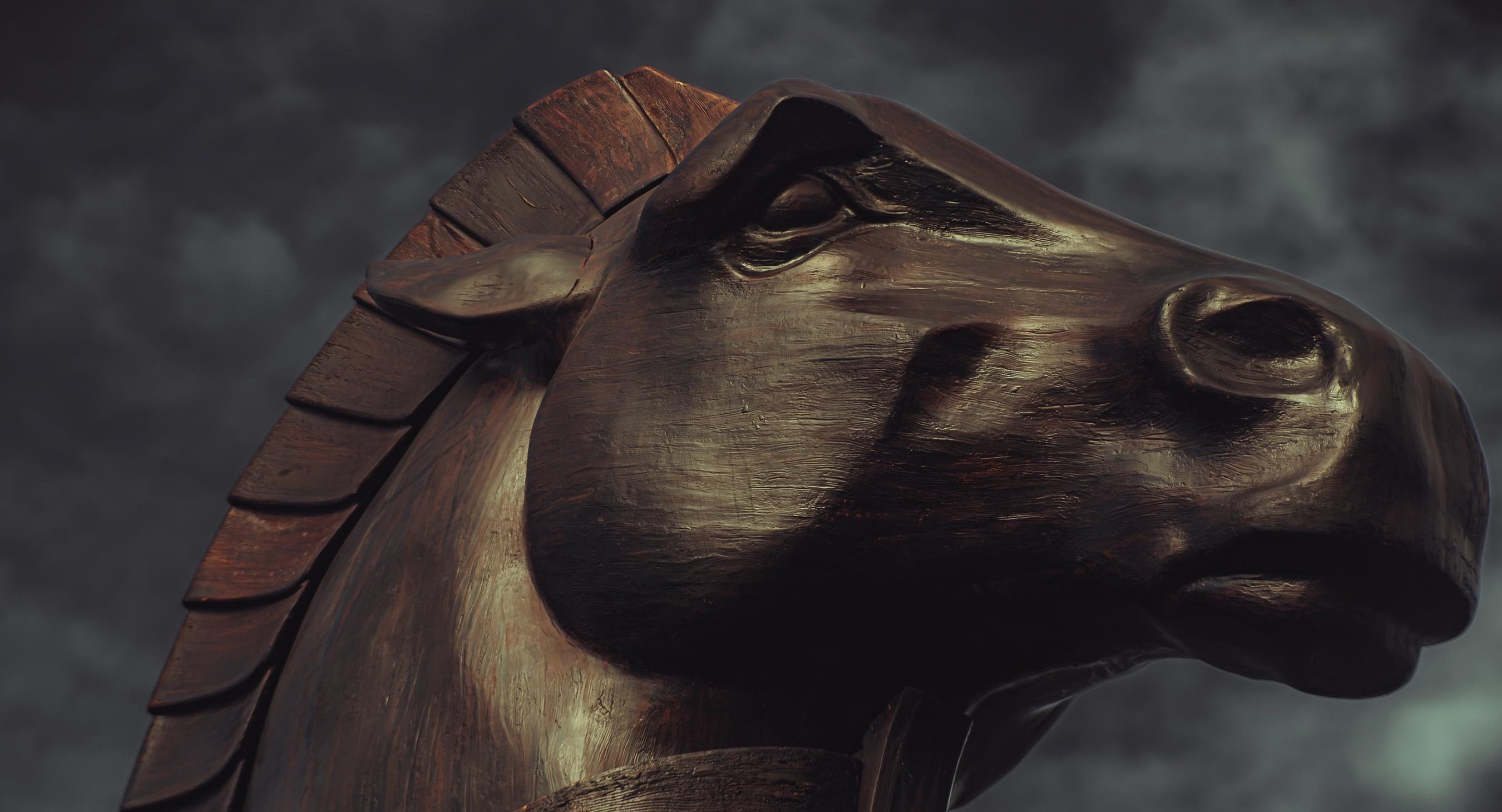
Meanwhile, Nolan’s supposedly “woke” adaptation of The Odyssey – the cosmic epic written from foundational Western literature – seems to be breaking through all coordinated attempts at sneer and confident predictions of a flop: it opened this week to the best reviews of his career and IMAX screens sold out a year in advance. And the involuntary awe follows close behind: when Jonathan gave his glowing review of the film – “The movie is a Trojan horse” — conservative commentators turned on him. I think he summed up this whole essay: one reason conservatives can’t have good art is that they have “the subtlety of Left Behind novels.”
Even the most highly online and reactionary cultural commentators build their audiences for the small chance to make something as impactful as a film (or a book that will become a film). Everyone wants to be Nolan. I realize that this goes against pretty much everyone’s conventional wisdom, left or right. The left tend to think that movies will go the way of live theater and radio in the wake of vertical shorts. The right generally agrees but thinks we should have stopped somewhere in the past. That moment of downfall will vary from the 90s to the 900s, depending on who you ask. But the logic of “progress,” good or bad, has actually not been so uniformly in one direction. As is evident in things like the Metaverse, for example, wasting billions of Zuckerberg’s money. It also increasingly seems to be the case with AI video; Sora shutting down this spring was a historic failure. Actually, AI seems to elicit a near-vomit-inducing level of disgust, which does not appear to be strict Ludditism because the younger generations can both spot it easier and hate it more. The fact is, global culture is still disproportionately downstream of film (even internet culture in terms of prestige and formative power), which is itself downstream of literacy. This is not showing signs of changing, even as the literate few shrink. This confuses the more reactionary types who see film as nothing more than a slippery slope towards slop: a guilty pleasure worse than reading but better than a vertical short. This isn’t true if you understand it on both axes.
The tech bros and corporate suits who have no capacity for thinking like this will continue to be baffled that people hate their AI images and videos. It’s the same reason we hate CGI, times a thousand. CGI can be wonderful when it is enfolded into the millions of embodied choices of an auteur. It is terrible when it flattens and shortcuts choices. When they film everything on greenscreen with soft lighting, they forgo their duty to make sacrifices for bringing into being an embodied vision, vowing to “fix it in post,” but really just using the opportunity to slough off a few thousand moral decisions. The result is a movie that looks perfectly realistic (CGI is photorealistic now), but has that uncanny feeling that people struggle to name, sometimes wrongly naming it “unrealistic.” It is really the flattening of these uncountable choices. Truly, an abdication of artistic responsibility. AI is this to the extreme. It is all spectacle and no responsibility; only a handful of human choices rather than a million. The difference will always confuse people who think the meaning of the image is flatly in the pixels.
The New Right’s strange and paradoxical hatred of modern film is really disowned love. If I were asked my own question, given a few weeks to think about it, I might say, “Because it’s really hard and I don’t know how. But I love movies and I hope more of us try to make good ones because we have the best story.” The actual work of “rebuilding the monasteries” or “retelling the cosmic epic” is creating films and other great art that genuinely moves us, for the masses, post-literate or not, rather than only mocking what they currently enjoy.
The full question was something like “Why can’t we tell better stories than Hollywood yet? Is it because self-conscious mythologizing necessarily devolves into irony?” I left out the second clause because unpacking it did not much for the essay, and the only panelist to directly respond was Jonathan who said he didn’t understand it.
I think the fundamental error people make is believing that art, particularly great art, is an expression of what the artist believes. I bet if you ask great artists why their work is great, most of them will give the wrong answer. Great art comes from people who devote their lives to making those millions of decisions, as you say, that somehow make everything fit together.
Basically no great accomplishment is an expression of what the person who accomplished it believes. That's not where accomplishments come from. We accomplish something when we surpass ourselves. If we try to merely embody what's already in us, we accomplish nothing.
Though I haven't seen it myself, it's no surprise to me that Nolan's film ended up great, despite all the signs about "woke" garbage. Nolan is just great, as his past creations mightily attest.
Yeah these are all good points. The New Right has still mostly defined itself by what it is against, not taking risks with a true creative spirit. But of course if you create something genuine, you also risk many on 'your side' also critiquing it. Which is why it's safer to keep defining yourself in the negative.
My novel being published later this year does do some of the things you are mentioning. Hopefully part of a new upswell of high quality art that transcends being woke or antiwoke, but also does more than just hearkens back to safe old stories. Like you say, we are in a hybrid age which requires hybrid stories.