

This Weekly Edition of Inkwell features James Taylor Foreman
THE AMERICAN GENIUS is to go west. No matter what question you pose to Americans, the answer is always, on some level, “Have you checked west of here?”
It began as the vast westerly horizon for gold-rushers and pioneers and explorers and those manifesting destiny. We have since exhausted the geographic frontier, but the West still remains the organizing spirit of American consciousness.
We go west in defiance of tall poppy syndrome, to prove that we know something that eludes the conventional wisdom of our tribe. I don’t know how deep this sort of thing can possibly go: whether it instantiates itself in the descendants of those who survived Western exploration, permeates the pentameter of our speech patterns, or is simply the theme of so many of our music and TV shows.
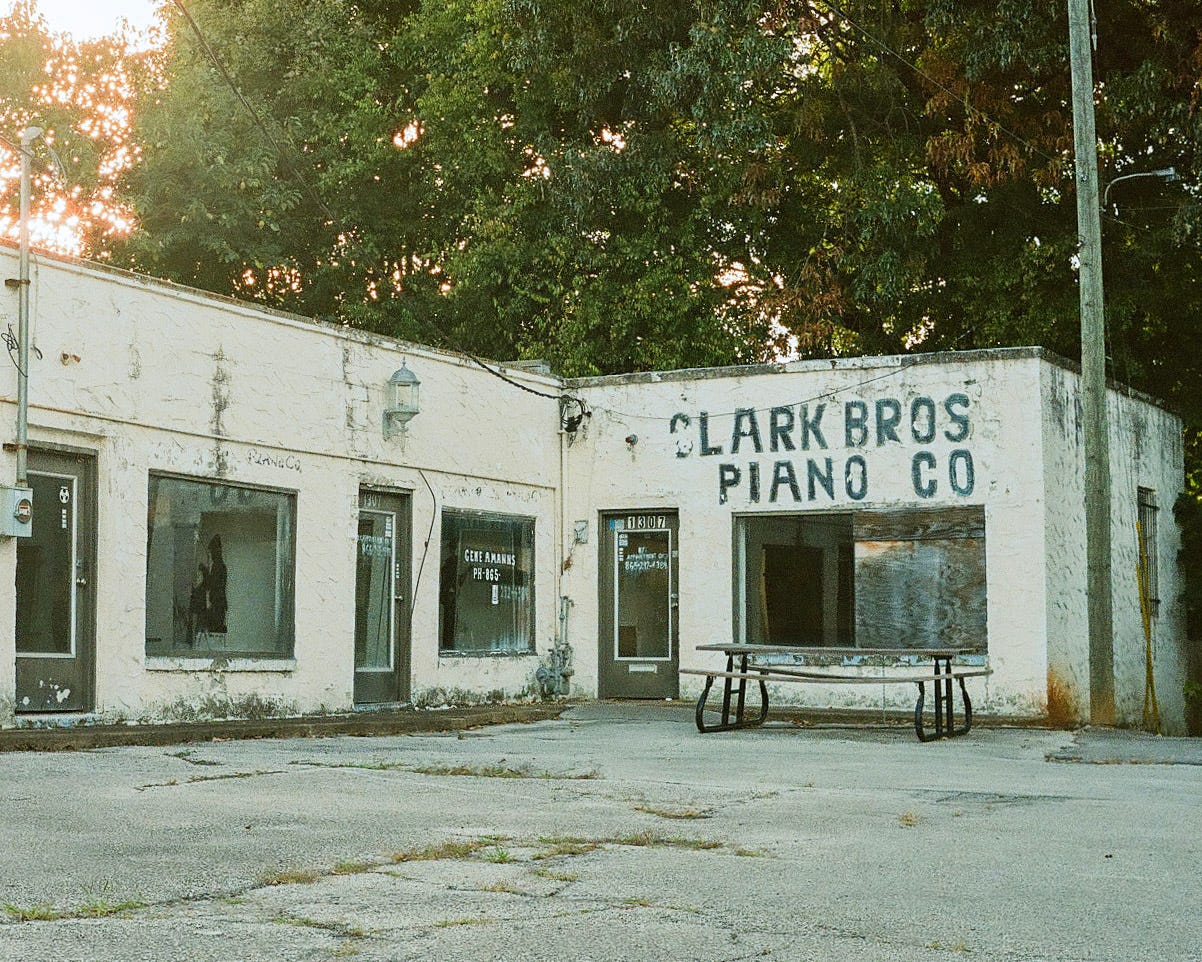
My own case is equally unclear to me. My dad jokes that when I was a baby, I was always running west, as if I were a migratory bird who could sense the magnetic poles, still unexplainable by science. Who knows where I picked that up—maybe it was in the pattern of how my tangles of DNA unfolded, or that I somehow understood the theme of radio music, or that I saw my older brothers getting on the school bus and wanted desperately to be old enough to go with them.

IF YOU’RE BORN in a small town and show a certain amount of promise, people will tell you to get the hell out. The American toddler is conditioned into westerly ideas: go to college, maybe read obscure books, get to the big city, get a fancy job. Practically, yes, there are more mentors, talent, and resources in the cities. But in many other countries, abandoning your home is a material evil.
Here, it’s fulfilling a prophecy: You will seek the semi-immortality of fame, wealth, or political clout. You will make us proud. Even wise mentors who love this small town will inevitably sit down with someone young and promising, look them in their teary eyes, and tell them to go while they can.
That’s all to say that the myth of getting out of the small town is a deep one, an American one, with many patron saints like Dolly Parton who caught a bus west the day after graduating high school, or the OG Christopher Columbus, who apocryphally defied the humble provincialism of European flat earthers to go find hidden lands over the watery horizon, or even martyrs like George Bailey, who spent the entire movie trying to get out of Bedford Falls and never managed. That spirit hasn’t diminished much, as far as I can tell. Around the world, people still watch American TV, listen to American music, and dream of going west.

I once visited some friends in Barcelona. It was one of the most beautiful places I’d ever been to: tight social communities, happy populations, good-looking people, jamón, walkability, and crystal-clear Mediterranean beaches. Still, when I met people about my age and told them I lived in Los Angeles, they went dewy and dreamy-eyed, practically clasping their hands by their cheeks, with a mystical yearning to make it out to LA one day.
This was surprising to me, because compared to Barcelona, the LA I knew was something like a hellhole: extreme isolation and social disharmony. Practically everyone there had gotten away from their village to be there as its Chosen One, to make something of themselves. And so you had this enormous stratification: demigods with probably more clout than Charlemagne, right alongside enormous populations of people helpless on the streets. I spent some time driving around LA, picking up homeless people and helping them get legal documents to sign up for public services. I remember this one guy barking about electronic rabbits wiring the circuits in his brain into regressive loops in the back seat, which somehow resonated with the fears I had about falling through the cracks of this place at the edge of the world.
When I first ventured out to LA, I drove all night—down through the desert bowl that contains the inhumanly hot Phoenix, then up through the mountains and down the hill again to see the endless sprawl of the greater city area. As soon as it appeared over the mountaintops, I could almost see a beam of mythopoetic energy shooting out the top and dispersing into the stratosphere.
I loved it. It’s a strange city, sort of phosphorescent with extreme gradations of human emotion and potential, authenticity, and unheard-of levels of phoniness. I met my wife there, and we’ll probably go back to visit many times. Sometimes, lying down to sleep at night, I miss that chest-compressed, lonely sensation mixed with the electricity of possibility, the smells of the theaters and the brighter-than-natural sunlight. I miss wondering, What if the Thing happens? Maybe that coffee with that studio exec will turn out to be the Thing?
WHILE IN LOS ANGELES, I kept having recurring dreams about coming back to Louisiana and staying in my dad’s house. When I pitched the idea to my wife, she was shockingly amenable. So here we are, back in my small town. And lo and behold, we’re finding some of that Westerly electricity is here too: The cardinal direction west that culminated in LA, both physically and mythopoetically, is now looking for new westerliness.
Part of that is cultural, part of it circumstantial, and part of it technological. A lot of people’s jobs are remote now, and people commute to the city center less than they used to. Half the meetings I’ve taken in the last five years were on Zoom, with producers sitting in someplace like Montana.
City centers grow enormous exurbs: endless suburban sprawls, abstracted places without social centers, third places between home and work for people to gather. The reason for that, as far as I can tell, is that the third place is the distant city. Everybody’s spiritual energy is pointed at the possibilities. The suburbs and the exurbs are hangers-on of a larger place; all their compasses are oriented toward the high-rises in the distance. So, often, there isn’t the psychic energy to invest in a suburban comedy center or art museum or whatever else.

What feels different about this particular exodus is that there’s a new opportunity for wholly self-contained, intercommunal city-states. Plato described the perfect polis as about five thousand families. Anything above that and you start running into the common problem of bigger cities: too many one-off interactions. People don’t know each other well enough to regulate psychopathic and parasitic behavior, so profiteering landlords, dishonest pyramid schemes, and swindles become too dominant, and it rots the structure from the inside.
HAPPILY, THERE ARE town squares throughout this country of about that capacity, which have, for most of American history, been merely the place to settle down, have children, and hope they leave and go further west for greater opportunity. Now, there seems to be an increasing cardinal inversion. We feel it, anyway. The new West may be to cultivate the character of each of these towns, to raise families and hope they stay to continue to cultivate our little local subsidiary polis.
Given the technological landscape, most people no longer absolutely need to move to cities for opportunity. It’s now an elderly myth to want to get the hell out of here, the idea that if you don’t, you’re somehow one of the left behind. But we still feel that as friction. Sometimes we have to explain ourselves: Yes, we’re still pursuing our creative careers. (We hope) this is not just what happens when you get a little bit older and maybe have a kid and need to give up on your dreams a little, but still want them in sight, so you move to the suburbs, still as close to the city as you can afford.
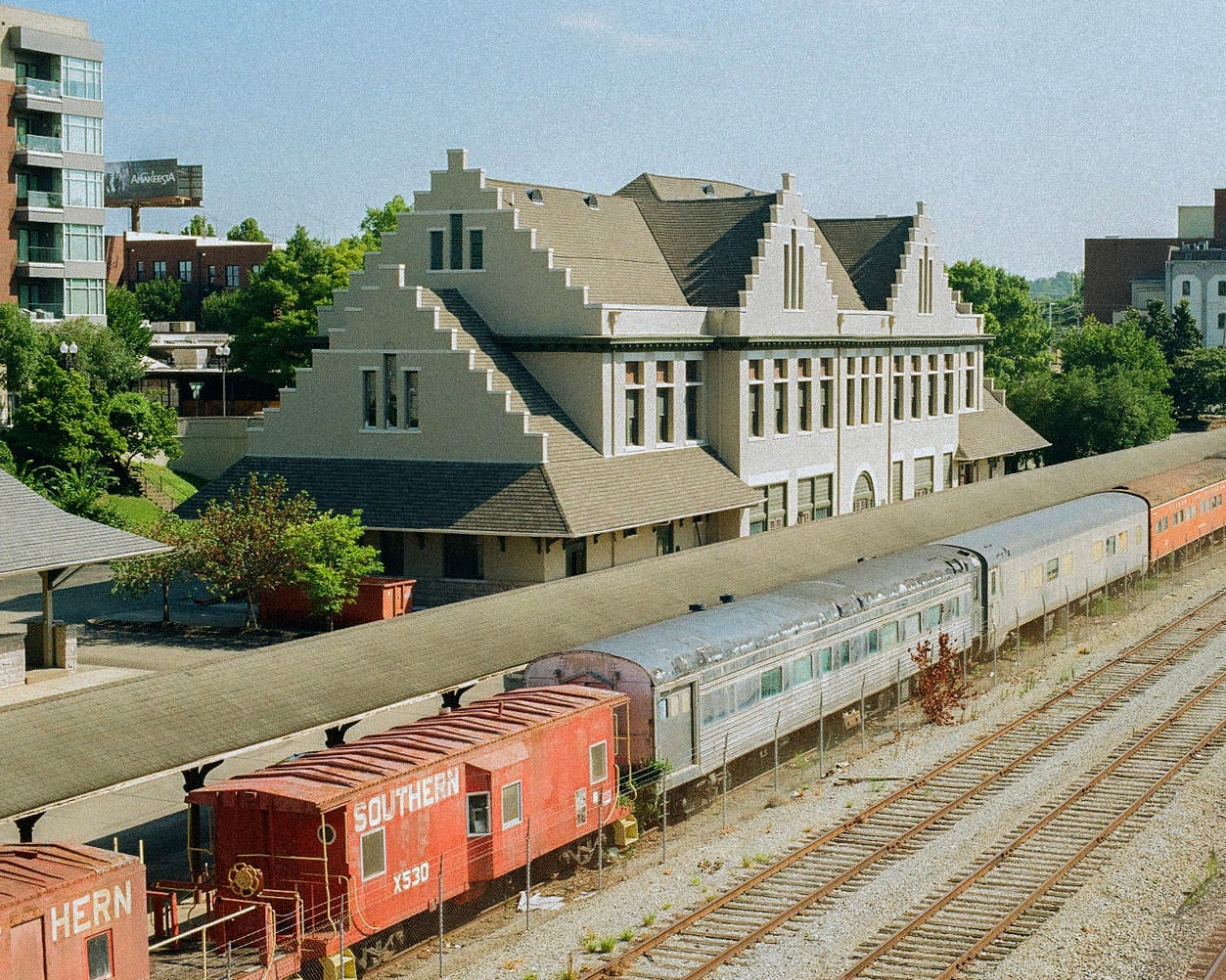
This seems like a new sort of project to me. As far as historical epochs go, it will take a long time for it to make mainstream sense. Maybe the fruits won’t even bear out in my lifetime. Maybe my kids will continue the project. Or maybe, as I did, they’ll give up on it for a time and go to some other version of the West, and then maybe they’ll come back too. It’s hard to be totally in command of these things, as much as we’d like to be. Interestingly, however, these are all characteristics of true frontiers.
For now, my wife and I are very much enjoying the day-to-day of small town life, deeply knowing practically everyone. In the first years, we started theater projects and improv troupes, gardening, fixing the house, writing, while still occasionally traveling to LA to make something. And then we’d come back home. For the first time in my life, that was incredibly attractive to me. That some people think I’ve given up and gone home with my tail between my legs is a small price to pay for what feels like a truer West.
📍NEW INKWELL POETRY COLLECTION: Want to steep in all kinds of myths on the map? Ruby Dunn has curated a collection for this series from our submissions inbox. Enjoy these stunning poems for this series here!

James Taylor Foreman
Writer
James Taylor Foreman is a Louisiana writer who studied philosophy, worked in Silicon Valley, and then moved back home with his wife. Born in the same parish where Walker Percy lived, he is also an existential Christian with some of those Southern Gothic sensibilities. When he’s not writing, you can find him looking out the nearest window.
📸 Photography by Alec Siek
For more on Christian living & place…


